Love to hear from you!
Get in touch.

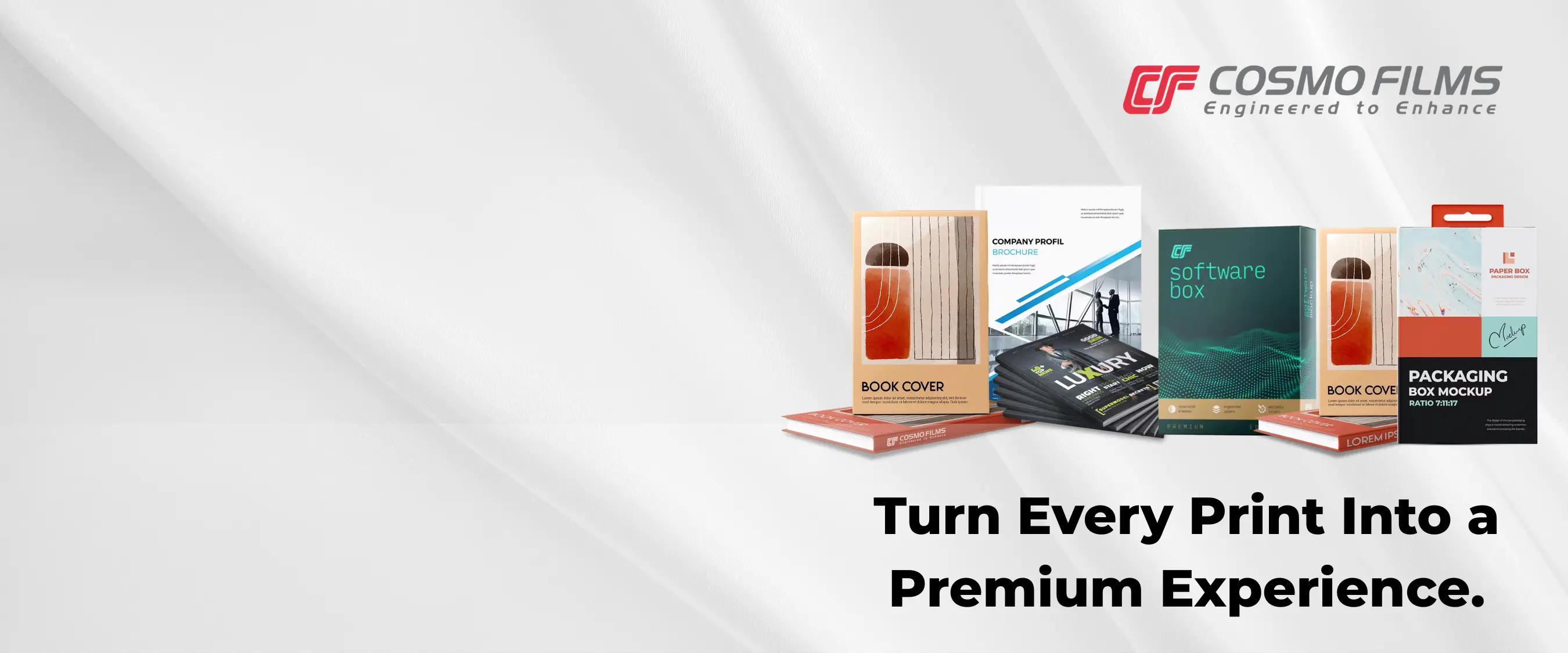
Commercial printing isn’t only about how a piece looks coming off the press, it’s about how well it holds up afterward. Whether it’s packaging on a retailer’s shelf or a pamphlet handled again and again, printed materials must be durable. Thermal lamination films provide an added layer of protection that also improves the look and feel of the final product. As finishing technologies evolve, they’re drawing more attention at events like PRINTING United Expo, where performance and design innovation are increasingly important.
Cosmo Films will be presenting at PRINTING United Expo 2026. Come see our thermal lamination films, review your application requirements, and learn how the optimal film enhances performance and overall finish.
📍 Booth: North Hall and Central – Level 1, N5569
📩 customerservice@cosmofilms.com
What is a Thermal Lamination Film?
Thermal lamination films are thin polymer films, usually BOPP or PET films, coated with a heat-activated adhesive. They attach directly to the printed surface when heat and pressure are applied. In other words, they work as a protective film that also enhances the look and feel of the print. Lamination can do so depending on the finish:
The Effect of Thermal Lamination on Commercial Printing Industry
Many printed products are handled far more than people realize, from shipping and storage to everyday use, therefore they’re constantly exposed to wear and tear. Without lamination, even high-quality print can lose its impact quickly. Thermal lamination helps by:
For printers, that means fewer reprints and shorter production times; for brands, it means a stronger first impression and fewer post-launch regrets.
It maintains the quality of packaging by:
Matte and scuff-proof films are particularly common in this region, as packaging must remain fresh and visually appealing from production through purchase.
Publishing Materials and Book Covers
Books, manuals and catalogs are processed repeatedly, which means durability is key.
Lamination aids in minimizing:
Matte finishes are generally more professional for a clean, unblemished surface compared to gloss when color vibrancy is important.
Marketing Materials (Flyers, Business Cards, Brochures)
Aspects of marketing collateral can mean a great deal. Thermal lamination enables brands to:
Labels and Pressure-Sensitive Applications
Labels also need to work everywhere, from refrigerated storage to high-touch handling.
Lamination helps improve the following:
Nowhere is this more crucial than in the food and beverage, personal care and logistics industries.
Restaurant Menus and Point-of-Sale Displays
Menus and POS materials are constantly exposed to spills, handling, and frequent use.
Lamination helps extend their usability by:
For businesses, that translates to both cost savings and consistency.
Photo Printing and Specialty Graphics
Visually correct photos and high-level graphics is everything in the industry. Thermal lamination helps:
Gloss films work a little at this point to boost vibrancy but specialty finishes may provide a distinct visual impact.
Opting for an Appropriate Thermal Lamination Film
Not every lamination film works the same way, and this will vary depending on your application. A few things to consider:
One step forward is working with a supplier who understands these variables, which can make the process much smoother and, hopefully, prevent performance problems down the line.
Why Performance Films Are Taking precedence among More Printers
Due to increasing expectations in print quality, the lamination process is no longer considered an extra. Instead, it’s forming a central aspect of production, particularly for applications where durability and presentation both matter. Printers are increasingly wanting films that:
And this shift is leading to more conversations at industry practices like PRINTING United Expo, where finishing technologies are a huge focal point.
See thermal lamination solutions in action
Thermal Lamination Film FAQs
1. What are thermal lamination films used for?
Thermal lamination films are used to protect and improve printed items, packaging, brochures, book covers, labels, etc. They enhance wear resistance, appearance and durability.
2. What are some finishes that thermal lamination films do?
Common finishes are gloss, matte, soft-touch and scuff-resistant matte. Both the visual and tactile effects of each differ in application.
3. What is the appropriate lamination film for me?
The right film will vary based on your print type, finish you want, durability needs, and usage environment. Best results require the film to match the application.
4. What is the gap between BOPP and PET lamination films?
BOPP films are a versatile and economical solution when it comes to general applicability: lightweight. PET films, more rigid and heat-resistant, are better for high performance needs.
5. Where can I find thermal lamination film suppliers in the USA?
Thermal lamination films can be sourced from U.S.-based manufacturers, distributors, and suppliers, who may offer U.S. slitting and warehousing capabilities. Being local can minimize lead times and improve supply reliability.
Love to hear from you!
Get in touch.