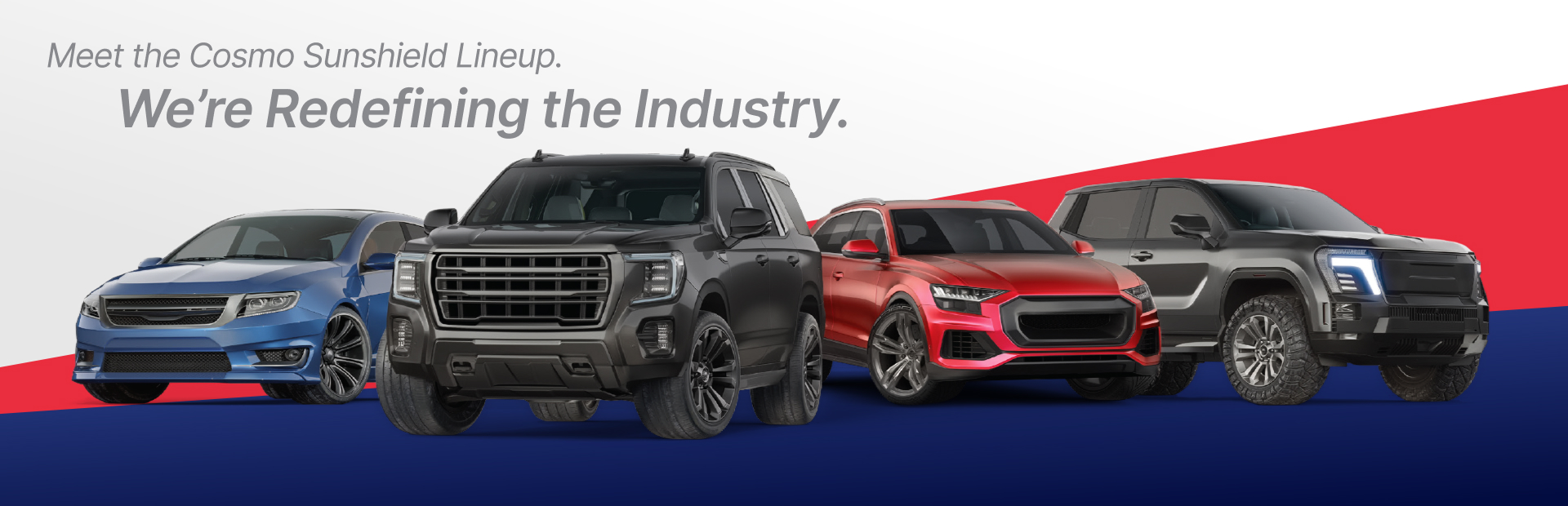
Cosmo Sunshield Lineup

CS Cobalt IR+

Cobalt IR+ is Cosmo’s flagship ceramic—loaded with nano IR particles for maximum heat rejection, true clarity, and fade-free, dye-free performance.

Learn More

CS Cobalt IR+

CS Carbon

Carbon is Cosmo’s sleek, modern film—built with true carbon nano pigment for strong heat rejection, clear optics, and long-lasting, dye-free color stability, all without the higher cost of IR technology.

Learn More
CS Carbon

CS Umbra HP

Umbra HP is Cosmo’s proven hybrid—combining metallized technology with true carbon nano pigment for strong heat rejection, rich color stability, and dye-free performance at a smart value.

Learn More

CS Umbra HP

Key Benefits

  • Reduce Glare
  • Stay Cool
  • Stay Connected
  • Limited Lifetime Warranty
  • Superior UV Protection

Frequently Asked Questions

Automotive window film, or window tint, is a thin laminate applied inside a vehicle's glass to control heat, glare, and UV exposure while adding privacy. It combines a polyester base with a dye, metal, ceramic, or carbon layer, topped with a scratch-resistant coating. Cosmo Sunshield's US lineup covers this with CS Cobalt IR+, CS Carbon, and CS Umbra HP.

Window tint cuts glare and interior heat, blocks UV rays that fade upholstery and age skin, and adds privacy for passengers and cargo. It helps hold shattered glass together in a crash, reducing injury risk from flying shards. Most drivers also just like the cleaner, more finished look it gives a vehicle.

Ceramic, carbon, and dyed window tints vary in performance and durability. Ceramic tint offers the best heat rejection, blocks up to 99% of UV rays, reduces glare, and doesn't interfere with electronic signals. Carbon tint provides good heat reduction, UV protection, and fade resistance with a matte finish. Dyed tint is the most affordable option, improving privacy and appearance while offering basic UV and glare reduction, but it provides the least heat rejection and may fade over time.

Yes. Quality window film blocks up to 99% of UV rays. Heat rejection varies more by film type: premium ceramic films can reject up to 95% of infrared heat, while basic dyed film rejects far less. Tint darkness and heat rejection aren't the same thing. A lighter ceramic film can outperform a darker dyed one.

Yes, but legal darkness (VLT, or visible light transmission) varies by state. New York and California require at least 70% VLT on front windows, while Texas and Louisiana allow as dark as 25%. Rear windows usually allow darker tint, and colored film like red or amber is restricted in many states. Check your state's current rules first.

Older dyed films are most likely to fade or turn purple or brown over time, as UV exposure breaks down the dye layer. Carbon and ceramic films skip the dye, so they hold color and clarity for the life of the film, often 10 years or more. Purple tint usually means it's time to replace it.

Lifespan depends on film type. Dyed film typically lasts 2 to 5 years before it fades. Carbon film generally holds up 5 to 10 years. Ceramic film is the most durable of the three, often backed by warranties running 10 years or longer.

Yes. Window film cuts the intensity of direct sunlight and reflected glare off other cars, wet roads, and snow, reducing eye strain and improving visibility, especially at sunrise and sunset. Even lighter tints with a high VLT still meaningfully reduce glare without making the cabin feel dark.